Feb 9, 2026

AI Gave Us Unlimited Tools. So Why Are We Still Stuck?
Because belief, not technology, has become the real bottleneck in decision-making, growth, and identity.

A portrait of the mind under permanent uncertainty.
This is a long-form essay. For the full reading experience, open it in the app or browser.
This is not about AI. It’s about what we still believe about ourselves.
On the drive home last night, I had one of those thoughts that wouldn’t let go.
AI is supposed to be the great equalizer. Low barriers to entry. Accessible to anyone with an internet connection. Tools that cost almost nothing but promise everything. Some analysts predict that AI tools could enable one-person companies to scale to valuations once reserved for large teams. That someone without coding experience can build products that sell for millions.
So here’s the question that kept circling: if the tools have no limits, what’s actually limiting us?
The answer hit me hard: our beliefs.
But it’s more complex than that. What I’ve come to understand is that we’re facing a fundamental shift in how success, identity, and decision-making actually work. The old certainties didn’t just fade—they were structurally replaced by a system where uncertainty is permanent, not transitional. And most of us are still operating with cognitive frameworks built for a world that no longer exists.
Part 1: Success Isn’t What We Thought It Was — And That’s Not Temporary
Let me tell you what I mean.
For decades, we had a formula. Go to the right school. Work hard. Climb the ladder. The path was clear, even if it was steep. This wasn’t just cultural wisdom, it was a predictable causal chain embedded in how institutions actually functioned.
I watched a version of this tension unfold in my own living room recently.
My nephew was debating where to study computer science, and his grandmother tried to reassure him: “Look at XY — he studied at a local college, and today he works at a great company.”
My nephew pushed back. He wants to attend a specific, well-regarded institution — even if it means studying far from home, because, as he put it, employers still look at where you studied, especially in technical fields.
And you know what? He’s partly right. But only partly.
Because AI is breaking that certainty wide open, and here’s the critical distinction: this isn’t a temporary disruption we’ll adapt to and stabilize. This is a structural shift to permanent provisionality.
A student can graduate from a prestigious university with top grades.
Meanwhile, another student from a lesser-known college launches a digital product during their final semester that brings in a million shekels. Who’s more successful?
The question itself reveals the problem. We’re using a comparative framework that assumes a single axis of measurement. But success has fractured into fundamentally incompatible definitions that can’t be reconciled or ranked.
What’s emerging is not a wave of isolated success stories, but a shift in how value is created and recognized.
In fields as different as digital art and software, people are now building meaningful income streams without the traditional credentials those industries once demanded. The common thread isn’t talent alone - it’s leverage.
A clearer example comes from the tech world. Base44, an Israeli startup, was acquired by Wix for approximately $80 million just six months after launch. The founder conceived the idea while serving in military reserves, built it rapidly using AI-adjacent tools, and exited before most startups even completed a seed round.
These aren’t just anomalies. They’re signals of what happens when traditional gatekeeping mechanisms, credentials, experience, institutional validation - lose their predictive power.
According to a 2023 PwC report, 67% of executives believe AI will enable entirely new business models they couldn’t have conceived of five years ago. But here’s what that actually means: the relationship between input and output has become non-linear and unpredictable.
The old equation—study hard → land dream job—assumed that credentials were both necessary and sufficient. Now they’re neither.
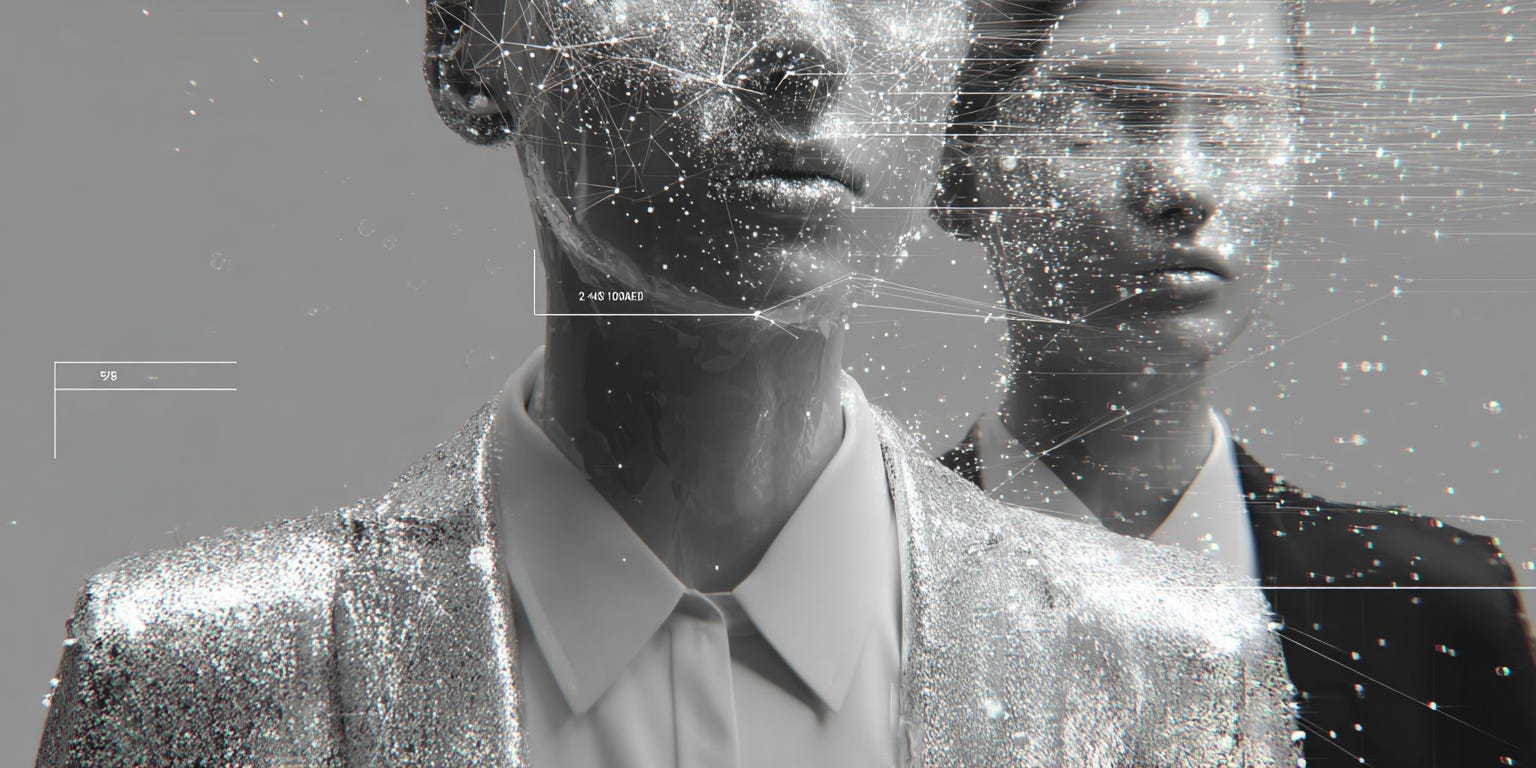
In an unstable world, success becomes a personal definition rather than a shared milestone.
For me, success might mean landing a role working with AI in a company I respect. For someone else, it’s successfully generating their first image using an AI tool. For another, it’s building a solo business that pays the bills. For yet another, it’s maintaining the freedom to pivot every six months without losing momentum.
There is no single path anymore. But more importantly: there’s no stable destination either.
What we’re experiencing isn’t just expanded optionality. It’s cognitive overload from the explosion of possibilities arriving faster than our capacity to evaluate them.
Barry Schwartz called this the “paradox of choice”; but what’s happening now is several orders of magnitude more intense. We’re not choosing between 24 types of jam. We’re choosing between fundamentally different life trajectories that didn’t exist as options six months ago and might not exist six months from now.
This creates what psychologists call analysis paralysis. Schwartz and colleagues demonstrated in their 2002 research that this isn’t just a feeling of being overwhelmed - choice overload actively triggers decision avoidance. When options exceed our cognitive bandwidth, the rational response becomes: don’t choose at all.

When everything is possible, choosing becomes heavier than not choosing at all.
While creating the images for this piece, I experienced the paradox directly.
Faced with multiple variations I genuinely liked, choosing one felt harder than choosing none.
So I didn’t. I selected all four.
Not paralysis, but amplified friction.
Part 2: The Formula Is Broken - And Uncertainty Is Now Permanent
Let’s be honest about what’s actually happening.
Since COVID-19, our baseline certainties started collapsing. Remember when isolation meant safety and proximity meant danger? When working from home went from “impossible” to “mandatory” overnight? That was just the beginning.
Then came October 7th and the ongoing instability in Israel. Tens of thousands of Israelis emigrated in 2024 amid that instability; including my own sister. Why? Because they realized there’s no “later.” Because uncertainty became the only certainty.
But here’s the deeper pattern:
These external instabilities created a mental model where provisionality became the default state.
In cognitive psychology, we distinguish between risk (known probabilities) and uncertainty (unknown probabilities). This isn’t a new idea - economist Frank Knight drew this exact line in 1921. But what’s new is the scale of the shift. We moved from a world where most decisions could be made under calculable risk to one where uncertainty has become the baseline condition. You can’t calculate odds when the game itself keeps changing.
And AI further accelerated that structural change.
The old cause-and-effect relationships we relied on? Gone. You can send out a hundred CVs and hear nothing back. Or you can post one piece of content that goes viral and changes your career trajectory overnight.
A 2024 LinkedIn report found that 58% of professionals feel their career trajectory is less predictable than it was three years ago. But the word “unpredictable” doesn’t capture it. The issue is that the mechanisms of success have become opaque and algorithmic.
You’re not just competing with other humans anymore. You’re competing for algorithmic visibility. Your CV might be filtered by an AI before a human sees it. Your content’s reach depends on engagement patterns that platform transparency reports confirm are updated continuously. Your product’s success depends on whether it surfaces in the right recommendation feed at the right moment.
This isn’t a level playing field that’s just tilted differently. It’s a system where the rules are hidden, constantly changing, and influenced by factors you can’t observe or control.
The pace is psychotic. What was relevant yesterday is obsolete today. I’ve worked in marketing- an industry that’s either being disrupted or completely restructured, depending on who you ask. New job titles are emerging, but there’s nowhere to build experience because the roles didn’t exist six months ago.
McKinsey estimates that by 2030, up to 375 million workers worldwide may need to switch occupational categories due to AI and automation. Their more recent work adds a detail that matters: AI is compressing the gap between old roles disappearing and new ones stabilizing — leaving a window where people are professionally stranded. But that number misses the real point: it’s not just about switching once. It’s about accepting that your professional identity is now provisional by design.
When there’s no reliable formula, chaos begins.

Order creates the illusion of fairness — until the rules start moving.

Visibility is no longer earned by skill alone — it’s negotiated with systems you can’t see or predict.
But here’s the thing about chaos: there’s productive chaos and destructive chaos. (Think of it as the difference between exploration and scattering — a distinction researchers in decision science frame as the exploration-exploitation tradeoff.)
And the difference between them isn’t about effort or intelligence. It’s about cognitive load management and decision-making frameworks.
A- Productive Chaos
Productive chaos looks like this: You learn multiple AI tools quickly. You ship a digital product in weeks instead of months. You build a distinctive digital identity that makes employers come to you. You focus on one idea, bring in collaborators, and launch something meaningful.
What makes this productive? It’s goal-directed action under bounded uncertainty.
Herbert Simon, who won the Nobel Prize for his work on decision-making, distinguished between “maximizers” (people who try to find the optimal choice) and “satisficers” (people who seek a “good enough” choice that meets their criteria). Simon’s deeper insight was that satisficing isn’t a failure to optimize; it’s the rational response when cognitive capacity is bounded. We can’t process infinite options. We never could. The difference now is how many options there are.
In a stable environment, maximizing makes sense. You can research, compare, and optimize.
In an uncertainty-based environment, maximizing becomes paralytic. There’s always one more tool to learn, one more pivot to consider, one more opportunity to evaluate.
Productive chaos means becoming a satisficer: identifying the minimum viable criteria for a decision, acting quickly, and adjusting based on feedback rather than trying to predict the perfect path forward.
B- Destructive Chaos
Destructive chaos looks like this: You scatter your attention across everything. You start a new project every day but finish nothing. Monday you want to work in data marketing. Tuesday you’re thinking about app development. Wednesday you’re wondering if websites even matter anymore since everyone will just ask AI for answers.
You’re paralyzed by the sense that whatever you choose will be the wrong choice.
This isn’t a character flaw. This is cognitive load collapse.
Cognitive load theory (developed by John Sweller) posits that working memory can only hold a limited amount of information at once. When we’re bombarded with options, conflicting signals, and rapidly changing contexts, we exceed that capacity.
The result? Decision fatigue, analysis paralysis, and a retreat into inaction or scattered experimentation that never accumulates into progress.
I can admit this: I’m not 100% certain what I want to focus on anymore. Because the ground keeps shifting.
But I’ve learned to distinguish between two types of uncertainty:
External uncertainty (what the world will look like, which tools will dominate, which industries will survive)
Internal uncertainty (what I’m capable of, what direction aligns with my values, whether I can adapt)
You can’t control the first. But you can work on the second.
Part 3: What Actually Blocks Us — The Psychology of Manufactured Certainty
Here’s where it gets uncomfortable.
AI has democratized access to powerful tools. But it hasn’t democratized belief.
Some people are sitting on the sidelines thinking: “I don’t need this AI thing. I think for myself. I won’t get sucked into this infinite loop. I won’t become dependent. I won’t change.”
The problem with that mindset? The world is changing whether you engage or not.
AI is already everywhere. It’s in your search results, your hiring processes, your social feeds, your bank’s fraud detection. Opting out is an illusion. You’re not maintaining control, you’re just choosing to be less informed about the system that’s already shaping your life.
But let’s be precise about what’s actually blocking people. It’s not technology aversion. It’s not lack of access. It’s not even lack of time.
The real blocker is the gap between our belief systems and the new operating environment.
Our brains evolved to seek patterns, predict outcomes, and conserve cognitive resources. For most of human history, this worked. The patterns were relatively stable. The future resembled the past closely enough that experience became wisdom.
Not anymore.
The Limiting Beliefs That No Longer Apply
Limiting belief #1: “Only people from certain backgrounds succeed.”
Reality: AI has made expertise accessible in ways that bypass traditional gatekeepers. Platforms like MIT OpenCourseWare, Coursera, and Google’s ML programs now allow motivated learners to achieve advanced understanding of machine learning in months rather than years, a pace that would have been unthinkable a decade ago.
But here’s the subtle trap: this belief gets replaced by a new one: “anyone can succeed now, so if I’m not succeeding, I must be failing personally.” Which creates a different kind of paralysis.
Limiting belief #2: “More effort equals more success.”
Reality: Research suggests the correlation between effort and outcome has weakened dramatically. Smart leverage matters more than raw hours worked.
A 2023 study by MIT and BCG found that consultants using GPT-4 completed tasks 25% faster and produced work rated 40% higher in quality. But critically, the gains weren’t uniform; they depended on how strategically the tool was used, not on how hard the person worked.
This breaks something fundamental in our motivational systems. If hard work doesn’t reliably lead to success, what does? And if we can’t answer that, how do we maintain focus and persistence?
Limiting belief #3: “If I just work harder, I’ll be recognized.”
Reality: Visibility is increasingly shaped by engagement algorithms rather than input effort. Strategic positioning matters - and so does luck.
The algorithm doesn’t reward effort. It rewards engagement. Someone who spends two hours creating a carefully researched post might get 50 views. Someone who posts a hot take in three minutes might get 50,000.
This isn’t meritocracy. It’s not even consistent. It’s a visibility lottery with weighted odds that you can slightly influence but never control.
Limiting belief #4: “There’s a safe, proven path.”
Reality: The proven paths are disappearing. Every path is now somewhat experimental.
And this might be the most destabilizing shift of all. Because humans need to believe that if they do X, Y will probably follow. That’s how we plan, how we invest time and resources, how we build careers and lives.
When that causality breaks down, we don’t just lose direction. We lose the framework for making directional decisions at all.
Why Certainty Feels So Valuable Right Now and Why That’s Dangerous
This is where it gets darker.
In an environment of radical uncertainty, certainty becomes the most valuable commodity, even when it’s manufactured.
That’s why courses promising “the formula for AI success” sell for thousands of dollars. Entrepreneurs who figured out how to gain followers are now selling their “system”—giving people certainty in exchange for money.
Let me be clear about what’s happening here:
Certainty feels more valuable than truth. When you’re drowning in options and nothing feels stable, someone offering a clear “do this, get that” formula provides enormous psychological relief.
The survivorship bias is invisible. You see the person who succeeded selling their method. You don’t see the thousands who followed the exact same method and failed. The sample is pre-filtered for success.
The game changes faster than the system can be learned. Even if a particular strategy worked six months ago, the landscape shifts so quickly that by the time you’ve learned and implemented it, it might be obsolete.
Money amplifies visibility, creating a false meritocracy. If you have capital, you can promote your product with paid ads, boost your posts, buy access to audiences. If you don’t, you’re competing on algorithmic luck. The playing field isn’t level—it’s tilted toward those who can afford to manufacture visibility.
Research on decision-making under uncertainty shows that humans are willing to pay a premium to reduce ambiguity, even when the “certainty” they’re buying is illusory. This is called ambiguity aversion, and it’s being monetized at scale.
Think about it: someone builds a following by posting consistently about AI. They gain 50,000 followers. They launch a course teaching “how I gained 50,000 followers.” People buy it because they see the proof- the follower count.
But what’s actually being sold? Not a repeatable system. A narrative of control in a chaotic environment.
Here’s the truth most won’t say: that person might have succeeded because of timing, luck, or a dozen invisible factors they don’t even recognize. Their “system” is a post-hoc rationalization of patterns they observed in their own success, patterns that may not generalize.
This isn’t to say all courses or systems are worthless. Some provide real value. But the why people buy them matters more than the content itself. They’re buying the feeling of certainty. The belief that if they follow steps A, B, and C, they’ll reach destination D.
In an uncertainty-based world, that feeling is incredibly seductive.
And it’s fundamentally misleading.
The Cognitive Trap of Provisional Identity
There’s another dimension to this that we need to talk about: what happens to identity when career paths are no longer stable.
For most of modern history, your profession was a core component of your identity. “I’m a teacher.” “I’m an engineer.” “I’m a doctor.”
These weren’t just job descriptions. They were social roles with clear boundaries, shared understanding, and predictable trajectories.
Now? Identity becomes provisional.
You’re a marketer—until AI automates half your job. Then you’re a “marketing strategist leveraging AI tools.” Then you’re a “prompt engineer.” Then you’re an “AI consultant.” Then you’re... what, exactly?
This isn’t career fluidity. This is identity dissolution.
And the psychological impact is significant. Research in occupational identity theory shows that when people lose stable professional identities, they experience higher rates of anxiety, decision paralysis, and difficulty forming long-term goals. More recently, researchers at MIT and Boston University found that this effect intensifies specifically in AI-reshaped roles — professionals whose work was being restructured by generative AI reported notably higher identity confusion and lower goal clarity than peers in stable positions. It’s not just that the job changed. It’s that the self around the job became uncertain.
Because how do you plan for a future when you don’t know what you’ll be doing or who you’ll be?
You start to see yourself as a collection of skills rather than a coherent professional self. Which might sound empowering, be anything! Learn everything!—but in practice often leads to scattered effort and shallow expertise.
The only thing you can genuinely control? Your beliefs about your capacity to navigate uncertainty.
When your default mental setting is open to success—in whatever form it takes, through whatever means- you stop limiting yourself. When you genuinely believe in your capacity to adapt, your brain starts routing you toward the places you imagine yourself being.
But this requires a level of psychological flexibility that most of us were never trained for.
Part 4: What Really Differentiates Success Today
Where does the core problem lie?
The issue might stem from several sources:
Unrealistic Expectations and Chronic Dissatisfaction: The environment normalizes “overnight success,” creating a disconnect between effort and reality.
Increased, Misguided Competition: AI tools are now universally accessible, intensifying competition. However, this competition is often measured by fleeting metrics like algorithmic visibility, follower counts, or revenue dependent on the next technological release.
The Shift to Unique Differentiators: With tools leveling the playing field, what truly distinguishes us is our uniqueness, which is entirely tied to our enabling and limiting beliefs.
This all points to a core breakdown, the erosion of the belief in a direct, predictable correlation between action and result, a theme previously discussed regarding AI tools, Botox, and the feeling of shame.
When that certainty disappears from even the most basic transactions—study this → get that job, send resume → get callback—it’s not just confusing. It’s existentially destabilizing.
And in that instability, people are desperate for certainty.
But here’s what I’ve observed: the people who seem to be navigating this successfully aren’t the ones with the best tools, the most followers, or even the clearest vision.
They’re the ones who’ve developed tolerance for ambiguity.
They’re satisficers, not maximizers. They ship messy first drafts instead of waiting for perfection. They make provisional commitments knowing they might pivot. They build in public, get feedback fast, and iterate.
They’ve accepted that there’s no formula. That success might look completely different from what they originally imagined. That the path will emerge through action, not analysis.
This isn’t motivational advice. It’s a description of a cognitive adaptation to a structurally uncertain environment.
Someone can have a brilliant idea, launch a startup using AI tools, but not know how to manage it, not understand the business fundamentals, not have it in their blood. That venture will probably collapse.
Sustaining success has become its own challenge - separate from achieving it.
Because the skills that get you to success (speed, opportunism, leveraging viral moments) are often in tension with the skills that sustain it (patience, systems thinking, long-term relationship building). Research on founder burnout and organizational psychology suggests this tension is real, though it’s still being mapped empirically.
And here’s the hardest part: you can do everything “right” and still fail.
You can be talented, hardworking, strategic, well-positioned, and still get caught in an algorithmic shadow. Still launch at the wrong moment. Still get outcompeted by someone with more capital or better luck.
This isn’t pessimism. It’s realism.
The uncertainty is real. The lack of reliable formulas is real. The provisional nature of success is real.
Moving through this world with confidence and self-belief isn’t a guarantee of success. But it’s the only real certainty you’ll have from here on out.
Closing Reflection: What Remains When Everything Else Is Provisional
I wrote in my last article that good things happen to good people. Then I caught myself. That belief isn’t accurate anymore,if it ever was. Too many good people have been lost in this war. They deserved good things.
Certainty, real certainty, doesn’t come from the outside world anymore.
It doesn’t come from following a proven path, because there aren’t any.
It doesn’t come from working harder, because effort alone isn’t enough.
It doesn’t come from learning the right tools, because the tools change faster than mastery accumulates.
It doesn’t even come from making the “right” choices, because in many cases there’s no way to know which choices are right until years later—if ever.
So where does it come from?
The only source of certainty I’ve found is this: the belief that I can navigate whatever comes next.
Not that I’ll succeed. Not that I’ll get what I want. Not that things will work out.
Just that I’m capable of adapting, learning, pivoting, and persisting through uncertainty.
I don’t know what tomorrow looks like. Neither do you.
But I know this: every time I broke through a limiting belief, I moved up a level.
Shedding that limiting belief didn’t solve my problems alone, but it freed up mental and emotional energy, allowing me to pursue new things instead of instantly dismissing them.
Perhaps the true skill now is not acquiring more tools, but removing the beliefs that stop us from using the ones we have.
It might be developing the psychological flexibility to let your identity evolve without shattering.
Maybe it’s realizing that maximizing is impossible; you can only satisfice and course-correct.
AI tools are limitless, but our limits remain: tolerating ambiguity, deciding without guaranteed outcomes, acting before feeling ready, and adapting when plans change. Limiting beliefs are inevitable. The choice is whether to treat them as truth or testable hypotheses.
Instead of waiting for an elusive certainty, which may never arrive, will you accept that all choices are provisional and simply move forward?
Will you continue the search for a definitive formula, or will you embrace the reality that the path is only revealed through the act of taking action?
I don’t claim to have the definitive answers; like you, I am navigating this in real-time.
However, one thing is clear: success in this new environment will not belong to those who find certainty, but to those who master the art of progressing without it.
What Really Limits Us When Nothing Else Does
In a world where tools are no longer the limiting factor, the question is no longer what is possible, but what we believe ourselves capable of doing within constant change.
Many of our beliefs were formed in a world of stability, clear hierarchies, and predictable paths. They are not wrong — they are simply outdated. The environment evolved faster than they did.
Artificial intelligence did not remove our limits. It exposed them. Not the limits of technology, but the limits of belief: our tolerance for ambiguity, our ability to act without guarantees, our willingness to move before certainty arrives.
What actually holds us back is rarely a lack of access, skill, or opportunity. It is the quiet assumption that we are not built for this pace, this uncertainty, this level of constant adaptation.

At some point, movement becomes a choice, and sitting becomes an act of agency.
And yet, every meaningful shift begins when that assumption is treated not as truth, but as a hypothesis. Something to test rather than obey.
If there is no longer a single correct path, no stable destination, and no reliable formula to follow, then the real question is not when we will feel ready — but whether we are willing to act even without that readiness.
The tools are already here. What remains is the belief that we are capable of using them, even as the ground keeps moving.
Thanks for reading, Shira Sarid / Digital Identity & AI! This post is public, so feel free to share it.