Feb 9, 2026

The Ghost in the Machine: Botox, AI, and the Augmented Authenticity Paradox
Why Using AI Feels Like Cheating—even When It Isn’t
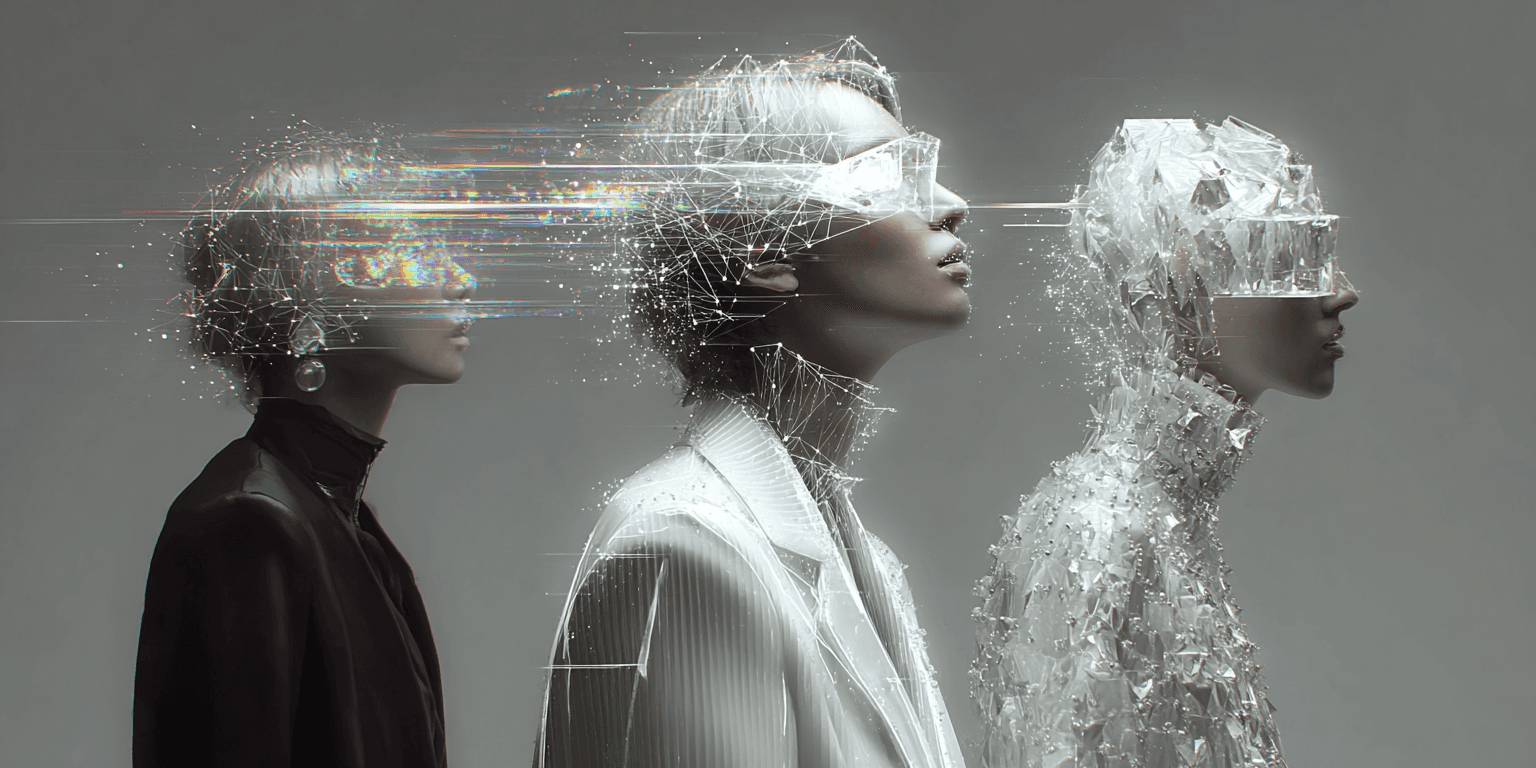
Augmentation didn’t erase us. It exposed the tension between who we are and how we create.
Imposter Syndrome is no longer a ghost in the human psyche; it has found a home in the machine. As generative AI becomes an invisible collaborator in our creative and professional lives, the friction between human intuition and algorithmic efficiency has reached a breaking point.
For many, using AI feels like a ‘digital Botox’—a secret enhancement we’re afraid to admit to, fearing it makes our work less natural, less ‘us.’ But what if the shame itself is the glitch?
In this deep-dive, we explore the Augmented Authenticity Paradox. We’ll navigate the neurobiology of creative blocks, the social stigma of the ‘effortless’ prompt, and why the future of work depends on understanding what AI is doing to our sense of self.
Welcome to the open lab. It’s time to decode the behavior behind the tools.
It starts with a subtle twitch of the cursor. You’re staring at a screen, whether in a high-rise office in Manhattan or, like me, navigating this digital frontier from my home base in Israel. By all accounts, the paragraph in front of you is perfect. But as you hover over the ‘Send’ button, a cold wave of Cognitive Dissonance hits. You didn’t sweat for these words; a generative model did.
This is the silent epidemic of the generative era: the Erosion of Agency. We are becoming world-class curators of machine-driven output, yet we find ourselves whispering about our tools as if they were a dark secret. Why has the most advanced collaboration in human history triggered our deepest Imposter Syndrome? The answer lies not in where we sit, but in the neurological architecture of how we assign value to our own work.
The Botox Analogy: Why We Hide Our Enhancements (And Why Transparency Works)
A decade ago, the “Botox Secret” was the gold standard of social etiquette. Women (and men) in high-pressure environments would spend thousands on injectable neurotoxins, only to claim their youthful glow was the result of “drinking more water.” To admit to “work” was to admit to being a fraud, to being “unnatural.”
Fast forward to 2026. A famous influencer on TikTok opens her clinic doors and casually shares that she just injected 20 syringes of filler into her face. The comments aren’t filled with “fake” or “fraud”; they are filled with “thank you for being honest.” Her transparency didn’t make her less authentic; it made her relatable.
We are currently in the “Early Botox Phase” of AI.
People are terrified that if they admit an LLM helped them structure a post or research a study, their “humanity” will be revoked. We write “Made from the heart, not AI” on birthday cards as if technology is a virus that poisons intent.
But this shame is a neurological trap, and it’s worth asking why we feel shame at all, rather than pride in our efficiency.
The Architecture of Digital Shame
Shame is not the same as guilt or fear.
Guilt says, “I did something wrong.”
Fear says, “I might get caught.”
Shame says, “I am wrong.”
It’s an identity-level emotion, and it’s what makes AI use feel existential rather than practical.
The shame around AI is socially conditioned, rooted in centuries of cultural programming that equates effort with worth and suffering with legitimacy. We inherited the Romantic myth of the tortured artist, the Protestant work ethic that valorizes visible labor, and the meritocratic fantasy that achievement is always proportional to pain. When AI removes the friction, it doesn’t just eliminate steps—it threatens the very foundation of how we prove we deserve our success.
This is why we don’t feel shame when we use a calculator or a spell-checker. Those tools are perceived as neutral efficiency aids. But AI? AI thinks. It generates. It occupies the space we reserved for the sacred: creativity, analysis, insight.
When the machine does what we thought made us valuable, we don’t just question our work—we question ourselves.

The Erosion of Agency: When the path to a result is no longer visible, we archive our struggle to prove we still exist inside the machine.
The Science of Feeling Like a Fraud
To understand why we hide our digital ghosts, we must look at the roots of Imposter Syndrome. The term was coined in 1978 by psychologists Dr. Pauline Clance and Dr. Suzanne Imes. It describes a persistent internal experience of intellectual phoniness, despite evident success.
But here’s what’s changed: Imposter Syndrome is no longer a niche psychological quirk. A systematic review by Bravata and colleagues in 2020 published in the Journal of General Internal Medicine found that Imposter Syndrome affects approximately 9-82% of professionals, depending on measurement tools, with the highest rates among high-achievers, women, and ethnic minorities. A meta-analysis by Chrousos and Mentis in 2020 showed 62% prevalence among knowledge workers in tech, academia, and creative industries—significantly higher than the general population.
And now, AI has become an accelerant. A 2024 study by Haim and colleagues in Nature Human Behaviour tracked 750 knowledge workers using GPT-4. While productivity increased 37%, self-reported “contribution anxiety”—the feeling of being less responsible for outcomes—increased 28% over three months. Separately, research from Harvard Business School by Dell’Acqua and team found that consultants using AI completed tasks 25% faster but showed significantly reduced confidence in outputs they didn’t fully understand the generation process for.
The pattern is clear: we are more productive and less certain. We deliver faster and trust ourselves less. The machine has given us speed, but it has taken something harder to name.
Speed without certainty. Productivity without trust.
The Effort-Reward Gap: Why “Easy” Feels Wrong
The reason AI triggers such deep discomfort is rooted in what I call the Effort-Reward Gap. Our brains are evolutionarily wired to equate effort with value. When the friction is removed, the brain struggles to “claim” the victory. If it was easy, our subconscious tells us, it wasn’t us.
This isn’t speculation. Research by Inzlicht and colleagues in 2018, published in Psychological Review, documented the “effort paradox”: humans assign higher value to outcomes proportional to effort invested, even when objective quality is identical. Neuroimaging shows this is processed in the ventral striatum—the brain’s reward center. Similarly, Kruger’s work on the “labor illusion” demonstrated that people value services and products more when they can see the effort, even if unseen effort was actually greater.
AI creates invisible labor. The machine works in microseconds. There’s no sweat, no visible struggle, no montage of late nights and crumpled drafts. And so our brains—wired for a world where effort was always visible—refuse to credit us for the result.
Feenstra’s 2020 research in Personality and Individual Differences adds another layer: Imposter Syndrome correlates more strongly with perfectionism and neuroticism than with actual competence gaps. It’s not that we’re unqualified. It’s that we don’t feel we’ve suffered enough to earn our place.
Does the Type of AI Use Matter?
An important nuance: does it matter what we use AI for? Is the shame different when AI writes our prose versus when it codes our app, analyzes our data, or generates our images?
The research here is still emerging, but early patterns suggest the shame intensifies when AI operates in domains we consider core to our identity. Writers feel more fraudulent when AI drafts sentences than when it formats references. Designers feel more exposed when AI generates concepts than when it resizes files. The closer the tool gets to what we believe makes us us, the more threatening it becomes.
Interestingly, there may be less shame associated with AI-assisted coding or technical tasks, domains already perceived as highly abstracted and tool-dependent. If you’ve always used frameworks, libraries, and Stack Overflow, adding Claude or GitHub Copilot feels incremental rather than revolutionary.
But this is a research gap worth naming. We don’t yet have comprehensive data on how AI shame varies by task type, professional identity, or creative domain. What we have are patterns, anecdotes, and the early tremors of a psychological shift we’re only beginning to measure.
ADHD and the AI-as-Scaffolding Revolution
This isn’t just abstract theory for me. As someone living with ADHD, my thoughts move faster than my hands can type. My brain is a whirlwind of non-linear connections, rapid-fire ideas, and “tabs” that never close.
For years, the “friction” of organizing these thoughts into a coherent, professional structure was a barrier to my success. AI didn’t give me the ideas; it gave me the scaffolding. It acts as my “External Frontal Lobe,” handling the executive functions—organizing, structuring, formatting—so that my actual human insights can shine.
Neuroscientifically, this mirrors what happens when we use calculators to “offload” working memory tasks: the tool handles computation; we handle strategy. Research by Hoxhaj and colleagues in 2019 found that digital tools reducing executive function demands significantly improved task completion rates for adults with ADHD without reducing cognitive engagement. A 2022 framework paper by Sonne presented at the ACM Conference on Human Factors explicitly described AI tools as “external executive function support.”
When I use AI to turn a chaotic brainstorm into a peer-reviewed research summary, I am not less authentic. I am Augmented. My intent is the same, my research is grounded in verified links, and my voice is the conductor. The AI is simply the orchestra.
Attention under load. Structure as support.
Exhibiting Effort in an Invisible Process
There was, however, a moment of regression.
Not in belief, but in behavior.
I found myself reaching back to 2015, uploading screenshots from my design school days. Old projects. Long processes. The kind that took months to learn and years to internalize. At the time, I told myself it was context. In hindsight, it was proof.
Proof that I knew the “real” way. That what now happens with a click once demanded time, discipline, and visible effort.
That post wasn’t about nostalgia. It was about legitimacy.
And only later did I recognize it for what it was: a reflex. A learned response to a value system that’s quietly collapsing. In a world where the path to a result is no longer visible, we compensate by exhibiting our past labor. We archive our struggle. We say—look, I worked hard. I earned this.
But the algorithm doesn’t reward effort. It rewards outcomes. The “way” has disappeared behind the interface, and with it, the cultural markers we once used to measure worth.
What I wasn’t trying to prove was skill. I was trying to prove effort. And that distinction matters, because it reveals how deeply many of us, especially those raised before friction disappeared, are still negotiating the loss of an equation we grew up with: time equals value.
Authenticity vs. Exposure
But here’s the real tension: even knowing this, even living it, I still feel the quiet discomfort of not being “finished.” Not shame about the tools themselves, but an awareness that mastery is still in motion. I don’t know every system, every workflow, every edge case — and I know that learning takes time. The difference is that today, the tools don’t erase my agency; they help me organize it.
Authenticity is often confused with exposure. But authenticity, to me, is transparency — not intimacy. I can be fully authentic without sharing my living room, my childhood photos, or my daily routine. I can write honestly about ideas, uncertainty, and process. When people hide their tools, their workflows, or their methods, it’s rarely about privacy. More often, it’s about fear, and that’s where imposter syndrome quietly lives.
Beyond Imposter Syndrome: What Else Is Shifting?
Imposter Syndrome is the headline, but it’s not the only behavioral shift AI is triggering. We’re seeing—or beginning to see—other patterns emerge:
Attribution Diffusion: When five people use the same AI tool to generate similar outputs, who deserves credit? The boundaries of intellectual ownership are blurring, and with them, our ability to claim singular authorship.
Verification Paralysis: Some users report obsessively fact-checking AI outputs to the point of paralysis, spending more time verifying than they would have spent creating from scratch. The anxiety isn’t just about being a fraud, it’s about being wrong.
Secrecy Behaviors: Many professionals use AI extensively but never disclose it, creating a shadow economy of augmented work. This isn’t just about hiding, it’s about performing a version of effort we no longer actually enact.
Overproduction, Under-Ownership: AI makes it trivially easy to produce. We generate more documents, more drafts, more content than ever; but feel less attached to any of it. Quantity explodes; emotional investment implodes.
Reduced Tolerance for Friction: Perhaps most unsettling, early adopters report decreased patience for tasks that require traditional effort. Why spend three hours formatting a presentation when AI can do it in three minutes? The efficiency is seductive—but are we losing our capacity to tolerate necessary struggle?
These aren’t definitive trends. They’re signals. Hypotheses. The behavioral research hasn’t caught up to the speed of adoption. But the patterns are worth watching.
The Solution: How Radical Transparency Kills Imposter Syndrome
The way to kill Imposter Syndrome is through Radical Transparency. Just as the influencer found power in admitting to those 20 syringes, we find power in admitting our digital collaboration.
When we hide our use of AI, we create a “Black Box” that feeds our anxiety. When we say, “I used AI to synthesize this research, and here are my conclusions,” we shift the focus from the Process to the Perspective.
What can you do if you feel like a fraud?
1. The Disclosure Hack: Explicitly state your workflow. “Thoughts by me, scaffolding by AI.” Watch how the anxiety melts when the secret is out.
2. Human-in-the-Loop (HITL): Ensure your original “Opinion” is the core. AI can write a summary, but it cannot have a “take.” Your unique, biased, human perspective is your only moat.
3. Verify, Don’t Just Generate: Imposter Syndrome often stems from a fear of being caught in a lie. Ground your AI output in real, verified research. For example: if AI drafts a paragraph about cognitive load theory, trace it back to Sweller’s original work. If you know the facts are true, you won’t feel like a liar.
The Questions We’re Not Ready to Answer
So where does this leave us?
The solutions I’ve offered—disclosure, verification, human-in-the-loop—are real. They work. But they’re also stopgaps, psychological first aid for a wound we don’t yet fully understand.
Because here’s what keeps me up at night: What if the shame isn’t irrational? What if, on some level, we’re mourning something real?
When AI handles the scaffolding, the structure, the synthesis—when it removes not just the tedious parts but also the formative parts—what are we quietly losing? Is there cognitive value in the struggle we’re so eager to outsource? Does the friction shape us in ways efficiency cannot?
If openness about AI use becomes the norm and the shame disappears, the world will indeed become more honest and psychologically healthier.
But alongside that clarity, a new question emerges: not who used the tools, but what truly distinguishes one person from another when everyone uses the same ones.
This question—what truly distinguishes us when our tools are identical—is the heartbeat of Talking Heads’ ‘Once in a Lifetime.’
David Byrne’s iconic, twitchy performance is a masterclass in navigating this exact paradox. He stands in a world of repetitive, ‘perfect’ loops, asking: ‘Well, how did I get here?’ > Press play below. Listen to the sound of a human trying to find his soul inside a machine that says it’s ‘same as it ever was.’
Click the image to activate the soundtrack: A human soul inside a digital loop
What happens to ambition when mastery is obsolete? What happens to identity when effort is no longer the currency of worth? And what happens to the parts of us that were forged in the heat of difficulty—the patience, the resilience, the tolerance for uncertainty—when AI makes difficulty optional?
I don’t have answers. Neither does the research, not yet. We’re conducting a live experiment on human psychology at civilizational scale, and we won’t know the results for years.
But I do know this: the shame we feel isn’t going away just because we name it. It’s a signal. A warning light on the dashboard. And before we silence it entirely, we owe it to ourselves to ask what it’s trying to tell us.
The ghost isn’t in the machine. The ghost is us, dissolving at the edges, unsure where we end and the algorithm begins.
And maybe that’s not a bug. Maybe that’s the future.
Know someone navigating the AI-Imposter cycle? Share this lab note with them.
FAQ: AI, Imposter Syndrome, and the Future of Work
Q: What is the official definition of Imposter Syndrome?
A: Imposter Syndrome (or Imposter Phenomenon) is a psychological pattern where individuals doubt their accomplishments and have a persistent internalized fear of being exposed as a “fraud,” despite external evidence of their competence.
Q: Does using AI make my work less authentic?
A: No. Authenticity is defined by Intent and Perspective. If the core idea and the final verification are yours, AI is simply a productivity tool, much like a calculator or a spell-checker.
Q: Why do I feel guilty using AI for creative tasks?
A: This is due to the “Effort Gap.” Our culture has long romanticized the “suffering artist.” When AI removes the suffering, we feel we haven’t “earned” the result. Overcoming this requires reframing your role from “Laborer” to “Visionary/Curator.”
Q: Is Imposter Syndrome more common among AI users?
A: Emerging research suggests yes. Studies show that productivity gains from AI are often accompanied by increased “contribution anxiety”—the feeling that you’re less responsible for, and therefore less deserving of credit for, the outcome.
Q: How does AI affect professionals with ADHD?
A: For many, AI serves as powerful assistive technology for Executive Functioning, helping to organize thoughts, manage cognitive load, and translate fast-paced thinking into structured output.